

For many Dreamers, education is more than an academic goal. It can also be a way to belong, build a future, and honor the effort of an immigrant family.
However, when policies limit access to education, school can become another kind of border. Not a geographic one, but a barrier that defines who gets to move forward, who is forced to wait, and who continues to feel that their place is being questioned.
In this context, mental health evaluations can help document the emotional impact that certain immigration experiences may have on a person or their family. These evaluations do not replace the work of an immigration attorney, but they can provide relevant clinical information in cases shaped by fear, separation, trauma, or uncertainty.
Also, if you need legal guidance, please consult an immigration attorney. If you’d like, contact us and we can share information about immigration attorneys we work with who may be able to support you through your process.
Important note: This is not legal advice. For specific decisions, it is best to consult with your immigration attorney.
Dreamers: young immigrants between education and uncertainty
Dreamers are young immigrants who came to the United States as children or teenagers and, in many cases, grew up, went to school, and built their lives in this country.
For many of them, the United States is not just the place where they live. It is where they went to school, learned the language, made friends, worked, imagined a career, and began planning a future.
Even so, immigration uncertainty can deeply shape their experience. DACA has offered temporary protection to many people, but it is not a permanent solution. USCIS currently states that it is accepting initial DACA requests but not processing them, while renewals continue for people who already have active protection. (Source: USCIS)
That is why talking about Dreamers is not only about immigration status. It is also about identity, roots, community, and emotional health.
Studying, working, and building a future in the country where they grew up
Education can be a way to imagine a possible life. For many young immigrants, getting access to college or a technical program means the chance to work in better conditions, support their families, and feel like active members of society.
However, that path is often filled with obstacles. Some Dreamers face challenges paying for school, accessing certain opportunities, qualifying for financial aid, or making long-term plans.
In addition, many personal decisions are shaped by uncertainty. Choosing a career, accepting a job, moving, or planning a family can feel much harder when a person’s immigration future is not fully secure.
As a result, education becomes much more than an academic stage. It also becomes a place where belonging is at stake.
Beyond an immigration label
In episode 7 of Impacto Migrante, Carla Parola speaks with Rafael Martínez, Assistant Professor of Southwest Borderlands at Arizona State University and author of Illegalized: Undocumented Youth Movements in the United States.
Throughout the conversation, they discuss the border, immigration policies, social movements, and immigrant identity. They also reflect on how young immigrants have organized their public voice, built community, and defended their right to belong in the country where they grew up.
One key idea runs through the conversation: immigrant communities do not only experience immigration policies. They also build forms of resistance, belonging, and collective memory.
Education as a social border
In July 2026, Florida’s decision to bar undocumented students from enrolling in its public colleges sparked criticism from immigrant rights organizations, educators, and civil rights advocates. Community groups described the measure as cruel and potentially illegal. (Sources: WLRN / WUSF)
This news shows something important: the border is not always on a map. Sometimes, it appears in an admissions office, in tuition that is impossible to afford, or in a policy that tells a young person their effort is still not enough.
That is why talking about education and Dreamers is also talking about power. Who gets access to training and education? Who gets to build a future? And who is recognized as part of the community?
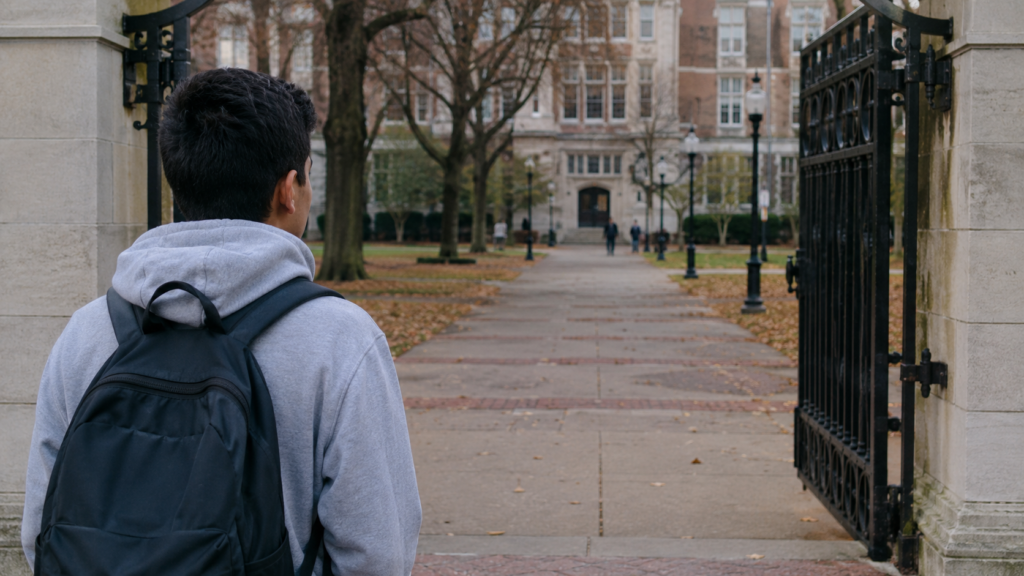
What happens when policies limit access to education
When a policy limits access to education, the impact is not only individual. It also affects families, communities, and entire generations.
A young person who cannot study may see their life plans interrupted. Their family may also feel frustration, fear, or helplessness, especially when that young person grew up in the United States and was educated within the country’s school system.
In many cases, these barriers can also deepen a sense of exclusion. A person may begin to wonder whether they truly belong in the place where they have lived most of their life.
For this reason, education policies are not emotionally neutral. They can open doors or close them. They can create stability or increase uncertainty.
How these barriers affect identity and emotional health
For a young Dreamer, growing up between two realities can be emotionally complex. On one hand, they may feel deeply connected to the United States. On the other, they may receive social or political messages that question their right to stay, study, or build a future there.
That contrast can affect identity. It can also create anxiety, sadness, family pressure, fear of rejection, difficulty planning ahead, or the feeling of constantly having to prove one’s worth.
The Migration Policy Institute has noted that fear related to immigration enforcement can be connected to the mental health and school engagement of Latino youth, especially when combined with discrimination, economic stress, and lack of safety. (Source: Migration Policy Institute)
In this sense, the emotional health of Dreamers cannot be separated from context. It is not only about individual resilience. It is also about the social, educational, and immigration conditions that surround their daily lives.
When belonging becomes a daily struggle
Belonging does not always mean having a document. Sometimes, belonging means walking across a campus without fear, being able to enroll in a class, imagining a professional future, or feeling that your story has value.
However, for many Dreamers, belonging is built under pressure. They move forward while facing barriers, explaining their story again and again, carrying family expectations, and living with narratives that reduce their identity to an immigration label.
That is why youth immigrant movements have been so important. They have shown that immigrant identity is not limited to fear. It can also include voice, organization, community, and the defense of rights.
Youth immigrant movements, community, and mental health
Youth immigrant movements have changed the way many people talk about immigration in the United States. Instead of accepting silence or shame, many young people began telling their stories, organizing, and claiming a place in public life.
This process does not erase fear or uncertainty. However, it can transform an individual experience into a community experience. When a person realizes they are not alone, they may also find the language to name what they are living through.
In addition, community can become a source of emotional support. It can offer information, accompaniment, care networks, and spaces where immigrant identity is not seen as a burden, but as part of a shared story.
That is why talking about Dreamers is also talking about mental health. Growing up with immigration uncertainty, facing educational barriers, and carrying an identity that is constantly questioned can leave important emotional marks.
The role of mental health evaluations in these types of cases
A mental health evaluation for immigration can help document the emotional impact of experiences connected to fear, family separation, violence, trauma, persecution, discrimination, or immigration uncertainty.
In some cases, this type of evaluation may be useful for processes such as asylum, VAWA, U Visa, T Visa, Cancellation of Removal, extreme hardship waivers, or other cases where emotional impact is relevant to the legal strategy.
For the immigrant, the evaluation can offer a professional space where their story is heard with respect. For immigration attorneys, it can provide clinical documentation that complements the case and helps present a more complete picture of what the person has experienced.
At Carla Parola Counseling, immigration mental health evaluations are conducted with a professional, culturally sensitive approach centered on each person’s story.
Because behind every case, there is more than paperwork. There is a story, a family, an identity, and a future that deserve to be understood with care.