

February is recognized in the United States as Black History Month, a commemoration that invites reflection on the history, contributions, and struggles of the African American community. However, beyond its cultural dimension, this month also opens a necessary conversation about civil rights, mental health, and immigration processes.
If you are going through a process to regularize your immigration status in the United States, or if you are an immigration lawyer handling these cases, understanding the historical impact of structural racism and discrimination can provide relevant clinical context in certain immigration psychological evaluations.
Below, we explain what happened in February, what this commemoration means, and which historical figures marked this month.
Important note: This is not legal advice. For specific decisions, it is best to consult with your immigration lawyer.
What happened in February in black history?
Black History Month has its roots in 1926, when historian Carter G. Woodson promoted “Black History Week.” He chose February because it coincided with the birthdays of Abraham Lincoln and Frederick Douglass, two key figures in the history of the abolition of slavery.
Over time, this week expanded into a full month of recognition and reflection. As a result, February became a space to highlight not only cultural and political achievements, but also the experiences of discrimination and exclusion that have profoundly impacted entire generations.
From a clinical perspective, it is important to understand that historical processes of discrimination can leave significant psychological scars. Prolonged exposure to racism, violence, or social exclusion can lead to symptoms of anxiety, depression, post-traumatic stress, or hypervigilance.
Therefore, in the current migratory context, many people of African descent who have experienced violence, persecution, or discrimination in their countries of origin may require a professional psychological evaluation that objectively documents these impacts.
What does Black History Month mean?
Black History Month is not just a cultural celebration. It also represents a formal recognition of historical injustices and the need to build more equitable societies.
In the field of immigration, this recognition becomes relevant when a person applies for benefits such as asylum, a U Visa, a T Visa, or immigration pardons. In these cases, experiences of trauma, persecution, or violence based on race, ethnicity, or identity can be clinically assessable elements.
For example, if you have suffered racial violence, threats, assaults, or systematic discrimination in your country of origin, these events can have documentable psychological consequences. An immigration psychological evaluation does not determine legal issues, but it can provide a detailed clinical analysis of the emotional and functional impact of such experiences.
Likewise, for immigration lawyers, having a solid psychological report can strengthen their comprehensive understanding of the case. In this way, the court or immigration authority has professional information that contextualizes the symptoms, diagnosis, and relationship between the traumatic event and the applicant’s current situation.
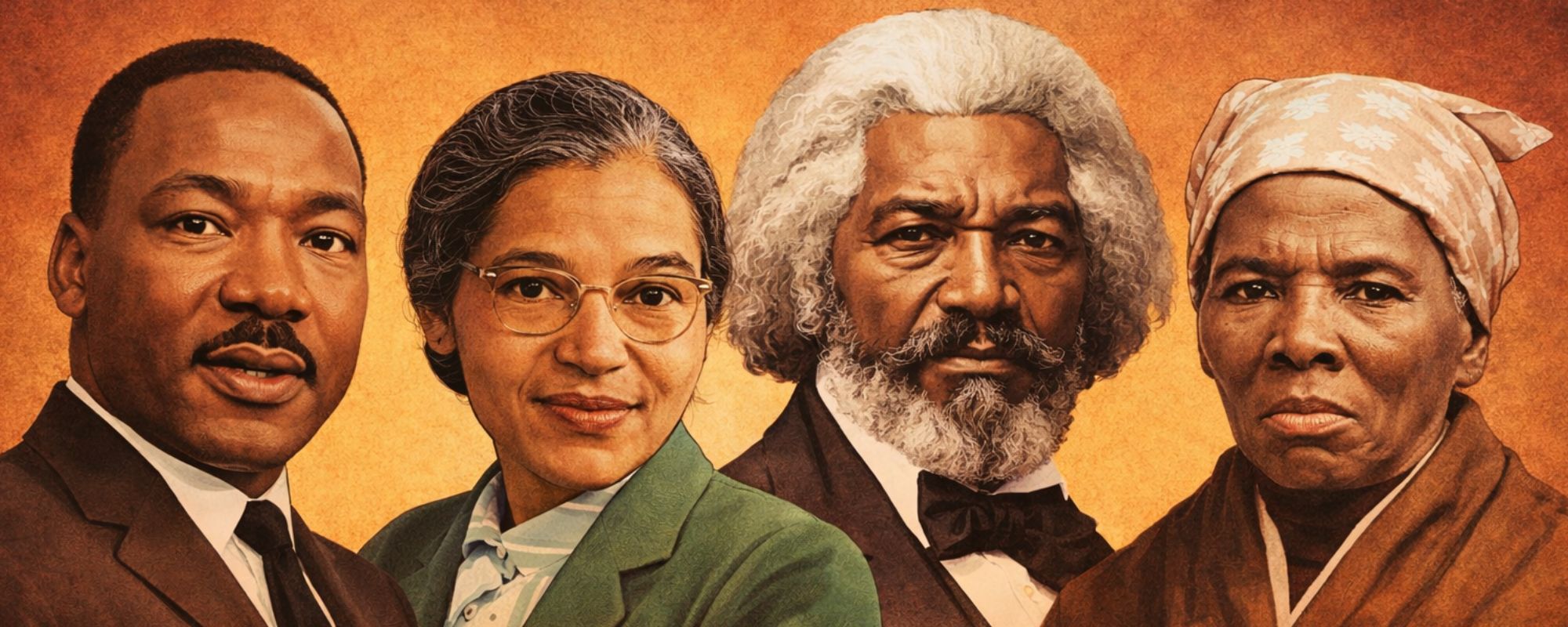
Important People in Black History Month
Throughout history, many figures have made fundamental contributions to the defense of civil rights. Among them are:
- Martin Luther King Jr., leader of the civil rights movement.
- Rosa Parks, symbol of peaceful resistance against segregation.
- Frederick Douglass, abolitionist and advocate for equality.
- Harriet Tubman, activist and fighter against slavery.
These individuals represent collective struggles against oppressive systems. However, it is also important to remember that behind social movements there are individual experiences of pain, resilience, and transformation.
Clinically speaking, resilience does not imply the absence of harm. Many people may have developed functional coping strategies, but still exhibit symptoms stemming from past traumatic experiences.
Therefore, if you are currently in the process of regularizing your immigration status and have experienced violence or discrimination, it is advisable to consider whether a specialized psychological evaluation may be relevant in your case.
Psychological assessments for immigration and historical context
Today, the immigration context in the United States can generate high levels of stress, uncertainty, and fear. Added to this, in some cases, is a history of persecution or racial discrimination.
Consequently, immigration psychological evaluations serve a specific clinical function: to objectively document the emotional and psychological impact of events relevant to the case. These evaluations can be used in processes such as:
- Asylum.
- U Visa.
- T Visa.
- Immigration waivers (I-601, I-212).
- Cancellation of removal.
The approach is always clinical, based on structured interviews, background checks, and recognized diagnostic criteria. In addition, the report must be clear, professional, and consistent with the standards required in the legal field.
Black History Month invites us to reflect on how historical processes influence current realities. Similarly, in the field of migration, each personal story is shaped by social, cultural, and political contexts that can have a real psychological impact.
If you are going through a complex migration process and have experienced violence or discrimination, it is important to know that your emotional well-being is also part of your story.
And if you are an immigration lawyer, incorporating a professional psychological evaluation can add clinical depth and technical support to certain cases.
Mental health is not a secondary aspect of immigration processes. On the contrary, it can be a central element in understanding a person’s experience and documenting it appropriately.